
Content Ritdech
Guan Yin Content
Mar
Guan Yin
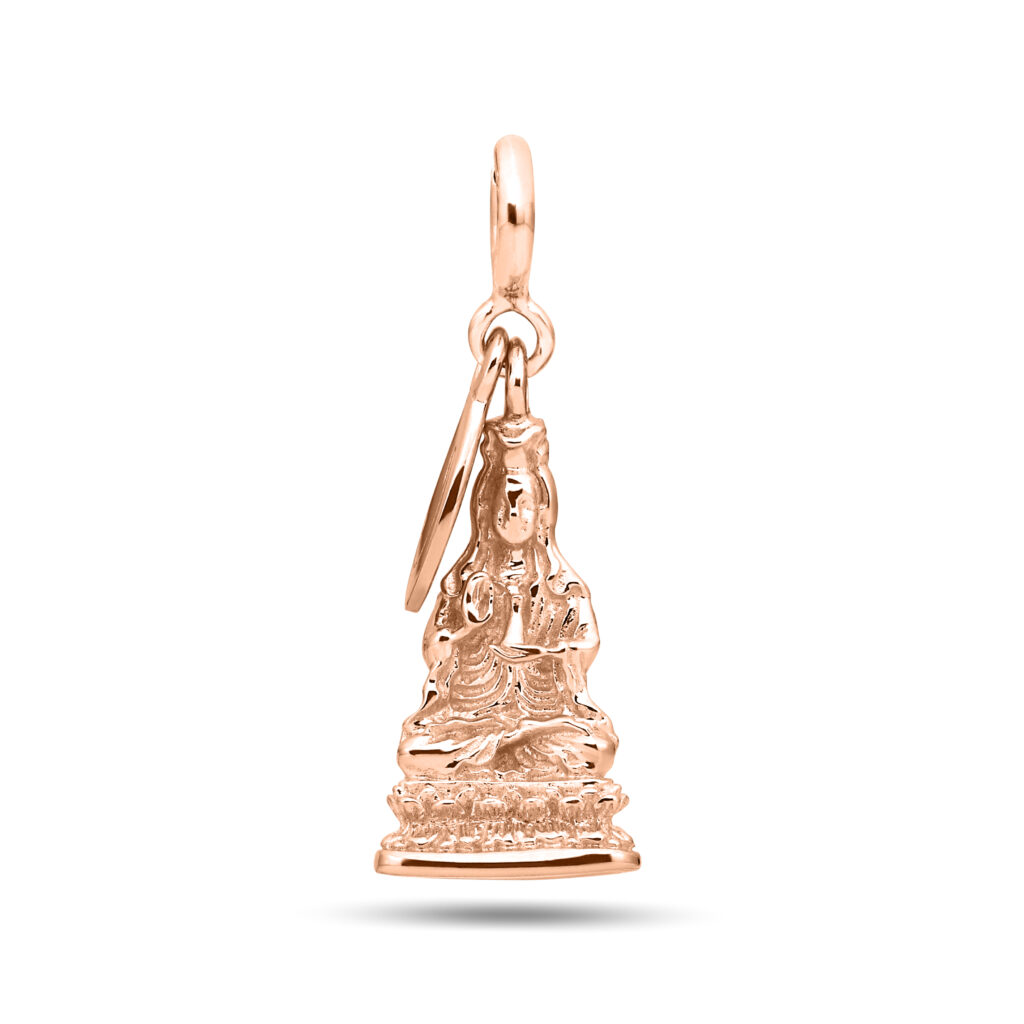
Guan Yin is a Bodhisattva in Mahayana Buddhism, identical to Avalokiteshvara Bodhisattva. Originating from Mahayana sutras in India, she has merged with the Chinese folk legend of Princess Miaoshan, resulting in her depiction as a female figure. This transformation emphasizes her gentleness and compassion, akin to a mother’s love for her child.
According to the legend, Princess Miaoshan, believed by many to be a goddess incarnate, was the daughter of King Miaozhuang of the Xingling Kingdom. She was deeply devoted to Buddhism, but her father opposed her and forced her into marriage, leading to numerous events. The most renowned story is when Princess Miaoshan, while meditating, learned of her father’s illness. Out of filial piety, she sacrificed her eyes and arms to heal him. Later, after attaining Arhatship, she regained her eyes and could manifest as the Thousand-Armed Guan Yin.
Another popular legend among Thai devotees tells of Princess Miaoshan achieving enlightenment and descending to hell to save her father, sacrificing her eyes and arms. Her father was later reborn as an ox, leading many Guan Yin followers to abstain from eating beef. However, Mahayana Buddhists do not need to abstain from beef, as Guan Yin worship does not prohibit meat consumption, though abstaining can accumulate merit for health in this and future lives.
The Meaning of Her Name
The name “Avalokiteshvara” has various interpretations, but etymologically, it comes from the Sanskrit words “Avalokita” and “Ishvara,” meaning “the Lord who gazes down” or “the Lord who watches over the world,” implying care for all beings in suffering. Chinese Buddhists know this Bodhisattva as “Guan Shi Yin” or “Guan Yin,” meaning “the one who perceives the sounds of the world.” Generally, this is interpreted as “the one who hears the cries of sentient beings (in suffering).”
Why People Worship Guan Yin
Guan Yin is highly revered as the Bodhisattva of Compassion. Her gentleness and readiness to help humanity make her akin to a mother’s love for her child. Anyone facing difficulties, whether in work, finances, love, luck, physical suffering, or health issues, can pray to her for help, seeing results in both worldly and spiritual aspects.
Who Should Worship Guan Yin?
– Those who desire success in their career, financial stability, and popularity.
– Those seeking fortune, wealth, and success, with goals of achieving progress in life.
– Those who wish to have children but are experiencing difficulties in conceiving.
– Those who desire to be free from illnesses and misfortunes.
How to Worship Guan Yin
When worshipping Guan Yin at a sacred place, prepare clean water, pink or white lotus flowers (or jasmine flowers), and nine incense sticks. If worshipping at home, prepare the following:
- Place the Guan Yin statue on a tray
- Prepare nine pink or white lotus flowers
- Nine incense sticks
- Two candles
- Four oranges and four pears (other fruits can be added except for mango, mangosteen, and jujube)
- Mooncakes or traditional Chinese pastries
- Four cups of tea
- Peach-shaped buns and a prayer bead necklace (if available)
There are various chants and mantras for Guan Yin, differing by dialect and belief. Most are in Chinese with Thai translations, and some ancient chants consist of only a few characters, making them easy to remember and recite.
Guan Yin Worship Chant
Namo Taishi Daibei Jiuku Jiuling Guangda Linggan Guanshiyin Pusa (Bow)
Namo Taishi Daibei Jiuku Jiuling Guangda Linggan Guanshiyin Pusa (Bow)
Namo Taishi Daibei Jiuku Jiuling Guangda Linggan Guanshiyin Pusa (Bow)
Namo Huk Namo Huo Namo Zheng Namo Jiuku Jiuling Guanshiyin Pusa Tangji Dao Om Gyaloh Huatoh Gyaloh Huatoh Gyaloh Huatoh Loh Gyaloh Huatoh Loh Gyaloh Huatoh Saphou Tianluo Xing Diluo Xing Nengli Ling Lingli Xing Jieqie Xianghui Wuding Namo Mo Poye Poluo Bik
(Bow)
Guan Yin, Chief Bodhisattva, I, [Name], humbly ask for the blessings of Guan Yin to help me achieve success in [specific area]… Toja Chief Bodhisattva
Translation of the Guan Yin Worship Chant
I humbly bow to Guan Yin, the great Bodhisattva, who is filled with great compassion and boundless mercy. Please relieve all sorrows, sufferings, and dangers. I acknowledge the power of the Buddha, the Dharma, and the Sangha. May Guan Yin, the great Bodhisattva, dispel all sufferings and illnesses. May happiness and all my wishes be fulfilled. May the gods above and the gods below dispel all karma and misfortunes.
Heart Mantra of Guan Yin Bodhisattva (Can be chanted at any time)
Om Mani Padme Hum
The translation and meaning of this chant honor and praise the compassion of Guan Yin towards all sentient beings, asking for her blessings to dispel illnesses and misfortunes, bringing happiness, prosperity, and fulfillment of all desires.
Places to Worship Guan Yin
Popular Locations in Bangkok and Nearby Provinces
- Guan Yin Shrine, Pom Prap Sattru Phai District, Bangkok
- Guan Yin Shrine, Bang Khun Thian District, Bangkok
- Guan Yin Temple, Phra Nakhon District, Bangkok
- Guan Yin Shrine, Samphanthawong District, Bangkok
- Guan Yin Shrine, Chom Thong District, Bangkok
- Guan Yin Bodhisattva, Bang Kruai District, Nonthaburi
- Guan Yin Temple, Bang Yai District, Nonthaburi
- Standing Guan Yin, Sam Phran District, Nakhon Pathom
- Guan Yin Shrine, Bangkok Noi District, Nakhon Pathom
- Guan Yin Shrine, Mueang District, Samut Sakhon
- Phra Maha Mongkol Phuttha Nimit Avalokiteshvara Foundation, Bang Pa-in District, Phra Nakhon Si Ayutthaya
